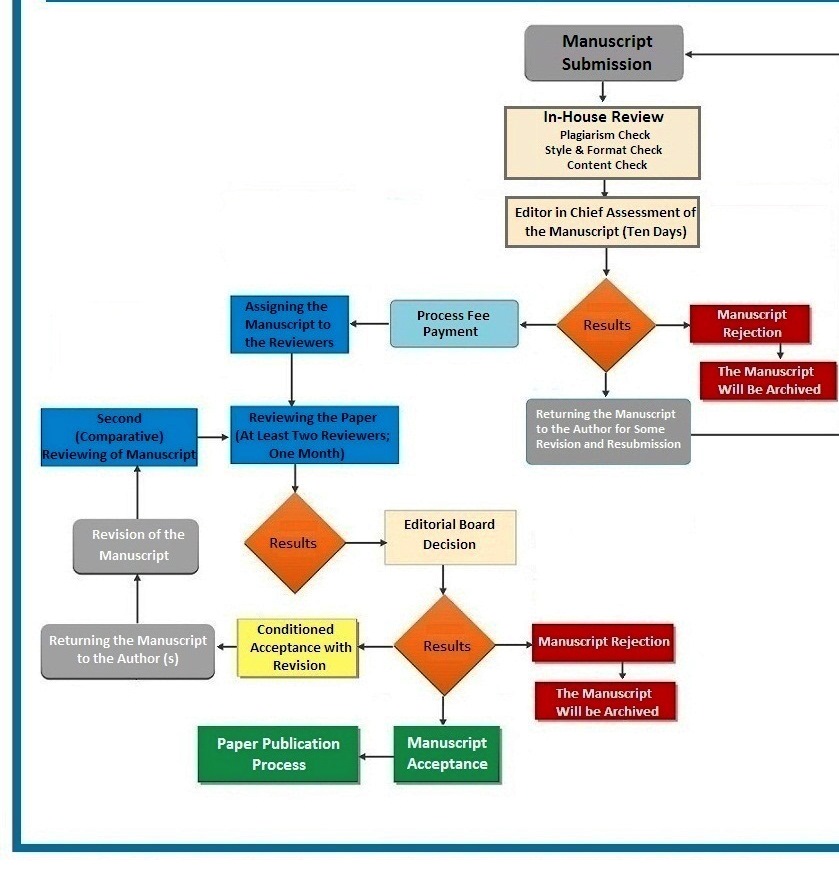
General principles that peer reviewers are required to follow
Reviewers should:
Only review manuscripts that are within their professional competence and that they are able to do at the time specified.
Respect the confidentiality of peer review information and do not disclose any information about manuscripts at any stage of the review.
Do not use information obtained during the review process to benefit themselves or any other person or organization, nor use this information to harm or discredit others.
Report potential conflicts of interest to the journal, or if a conflict is uncertain, contact the journal to confirm.Do not allow their review to be influenced by issues such as nationality, religion, political beliefs, gender, or other such issues related to the author.
Be neutral and constructive in their reviews, and avoid verbal abuse and the use of offensive or offensive language.
Understand that the peer review process is a two-way process and complete their part of the work within the time allotted.
Impersonating another person during the review process is considered very serious misconduct.
Expectations during the peer review process
Reviewers should:
Respond at the time allotted, especially if they are unable or unwilling to review.
Inform if they do not have the professional ability to review.
Only agree to review if they are able to do so within an agreed timeframe.
Report any incompatibility of the work/works with their interests.In cases of inconsistency, follow the journal's policy in refereeing.
Review manuscripts that they have previously reviewed for other journals in their entirety from the beginning, as there is a possibility of many changes between two different submissions.
Ensure that their suggestions for alternate referees are based on their suitability, not personal circumstances.
Avoid accepting refereeing a manuscript that they are only interested in reviewing for informational purposes, rather than actual refereeing.
Avoid accepting the work if they are unable or unwilling to provide impartial refereeing.
Avoid refereeing if they have played any role in the research.
Avoid refereeing if they are themselves conducting research similar to the submitted manuscript or have submitted it to another journal.Expectations during review
Reviewers should:
Inform the journal immediately if they encounter an inconsistency during review that was not apparent at the time of acceptance.
Inform the journal immediately if they are unable or unwilling to review all parts of the manuscript.
Refuse to include other individuals, including students and researchers under their supervision, in the review without the journal’s permission.
Keep the entire manuscript submitted and its reviews confidential.
Regarding anonymous peer review If they have doubts about the identity of the author, and this would cause a specific inconsistency, they should inform the journal immediately.
If they encounter a specific irregularity or ethical issue regarding various aspects of the manuscript during review, they should inform the journal immediately.
Do not intentionally prolong the arbitration beyond the specified time limit.Ensure that their judgment is based on the merits of the work submitted and not influenced by personal, financial, or other conflicts.
Avoid contacting authors without permission from the journal.
Expectations when preparing a review report
Reviewers should:
Be constructive and impartial, and inform authors of their constructive comments to improve the manuscript.
Avoid making insulting comments and unfounded accusations.
Be specific in their criticisms and use relevant evidence to support general opinions.
Be aware of language-related sensitivities, especially for authors who are not native speakers.
Identify the additional research that is essential and needed to support the claims made in the manuscript.Do not write the report in a way that is negative or unfair to a specific person.
Ensure that your suggestions to the journal editor and the original author are consistent and consistent.
Avoid suggesting that you cite the reviewer's own work just to increase the citation rate of your own article