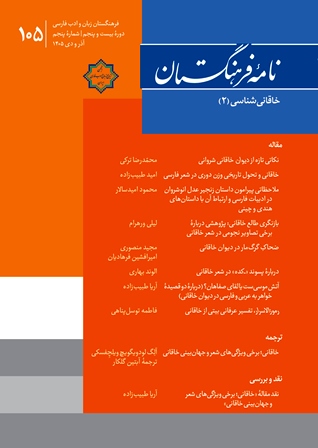
نامه فرهنگستان

نامه فرهنگستان

بازنگری طالع خاقانی: پژوهشی درباره برخی تصاویر نجومی در شعر خاقانی

نوع مقاله : مقاله پژوهشی

نویسنده
استادیار زبانهای باستانی و ایرانشناسی، دانشکده ادبیات و علوم انسانی، دانشگاه تهران
10.22034/nf.2026.553997.1474
چکیده
خاقانی در اشعارش، مجموعاً، نُه بار به برج طالع خود اشاره کرده است، اما گاهی برج طالعش را سرطان و گاهی اسد گفته است. شارحان خاقانی، برج اسد را طالع اصلی دانسته‌اند و در توضیح این تناقض توضیح داده‌اند که او به دلیل آنکه خرچنگ (سرطان) کج‌رو و واپس‌رو است، طالع خود را برج سرطان ذکر کرده است و این امر صرفاً تمثیلی ادبی است و ارتباطی با برج طالعش در زندگی واقعی‌اش ندارد. در این نوشته کوشیده‌ایم تا نشان دهیم که شاعری چون خاقانی، با دانش نجومی گسترده و دقیق وهمچنین شیوۀ عالمانه‌ای که در استفاده از مفاهیم نجومی دارد، دربارۀ موضوع مهمی چون طالع، که پایۀ بسیاری از محاسبات نجوم قدیم است، مسامحه نمی‌کند، بلکه پس از تعیین تاریخ سرایش برخی از اشعاری که در آن به برج طالع خود اشاره می‌کند، می‌توان دانست که او ابتدا طالع خود را برج سرطان می‌پنداشته است، اما بعداً دریافته که طالعش برج اسد است. ضمن نشان دادن سیر این تغییر رویکرد، برای نشان دادن شیوه‌ای که خاقانی در به کار بردن مفاهیم نجومی در اشعارش در پیش می‌گیرد، به سراغ مخالفت کردن خاقانی با پیشگویی‌های مربوط به قِران 582 هـ.ق رفته‌ و نشان داده‌ایم که مسألۀ «قران مسترقه» دلیل مخالفت خاقانی با این پیشگویی‌هاست.
کلیدواژه‌ها

موضوعات


عنوان مقاله English

Reconsidering Khaqani’s Ascendant: A Study on Some Astrological Imagery in His Poetry

چکیده English

Khaqani refers to his ascendant sign nine times throughout his poetry, yet he inconsistently identifies it as either Cancer or Leo. Most commentators have regarded Leo as his true ascendant, interpreting his references to Cancer as purely metaphorical: since the crab (Cancer) moves backward and obliquely, they suggest that Khaqani invoked it symbolically rather than astrologically, without any connection to his actual horoscope. This article challenges that assumption and argues that a poet such as Khaqani—renowned for his extensive and precise knowledge of astronomy and astrology, could not have erred on a matter as fundamental as the ascendant, which forms the basis of numerous calculations in classical astrology. By dating several of the poems in which he mentions his ascendant, we demonstrate that Khaqani initially believed his ascendant to be Cancer, but later discovered that it was in fact Leo. In tracing this intellectual and poetic transformation, we further analyze his opposition to the astrological predictions surrounding the great conjunction (qirān) of 582 AH. This analysis reveals the central role of the concept of qirān-i mustarqa (“concealed conjunction”) in shaping Khaqani’s rejection of those forecasts. Overall, the study highlights the poet’s sophisticated engagement with astrological discourse and his evolving interpretation of celestial signs within the broader context of medieval Persian intellectual culture.

کلیدواژه‌ها English

Kaqani"
Ascendant"
Dating of Poems"
The Great Conjunction of 582 A.D"
"
Concealed Conjunction"

مقالات آماده انتشار، پذیرفته شده
انتشار آنلاین از 08 بهمن 1404

  • تاریخ دریافت 26 مهر 1404
  • تاریخ بازنگری 04 آبان 1404
  • تاریخ پذیرش 12 آبان 1404