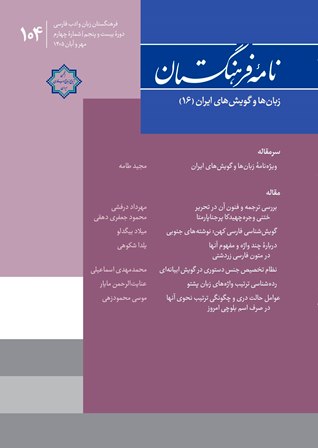
نامه فرهنگستان

نامه فرهنگستان

نظام تخصیص جنس دستوری در گویش ابیانه‌ای

نوع مقاله : مقاله پژوهشی

نویسنده
گروه زبان و ادبیات فارسی دانشگاه آزاد اسلامی واحد تهران مرکز
10.22034/nf.2026.563111.1490
چکیده
در این مقاله کوشیده شده‌است تا براساس دیدگاه کوربت (2005c) توصیفی کامل از نظام تخصیص جنس دستوری گویش ابیانه‌ای ارائه گردد. این بررسی که نتیجۀ پژوهش میدانی نگارنده است، بیانگر آن است که ارتباط فراگیر و یک‌به‌یکی میان مشخصۀ جنس دستوری و جنس زیست‌شناختی وجود ندارد و براساس معیار معنایی، به‌جز چند استثنا، مانند اسم‌های خویشاوندی و اسم برخی جانوران اهلی، نمی‌توان جنس دستوری همۀ اسم‌ها را تعیین کرد. همچنین براساس معیار صوریِ واج‌شناختی، جنس دستوریِ فقط سه دسته از اسم‌ها از صورت آنها آشکار است؛ به این ترتیب که اسم‌هایی که به واکۀ /ɑ/ ختم می‌شوند، مذکرند ولی اسم‌هایی که به واکۀ /e/ یا پسوند بی‌تکیۀ /-a/ ختم می‌شوند، مؤنث محسوب می‌گردند. پسوند بی‌تکیۀ /-a/ مهم‌ترین و پربسامدترین نشانگر مؤنث‌ساز است به‌طوری‌که در نظامِ مطابقۀ صفت، ضمیر و فعل نیز ظاهر می‌شود. بنابراین، می‌توان نظام تخصیص جنس ابیانه‌ای را بیشتر صوری دانست تا معنایی؛ گرچه در بقیه موارد معیار مشخص و دقیقی نیز وجود ندارد. نکتۀ دیگر ارتباط مقولۀ جنس با مقولۀ شمار است. به این معنا که صورت مفرد و جمعِ اسم‌های مؤنث دو گروهی که دارای نشانگر صوری‌اند، کاملاً یکسان است. به عبارت دیگر مقولۀ شمار در این گروه از اسم‌ها نمود آشکار ندارد. صورت جمع اسم‌های مذکرِ دارای نشانگر صوری، با تبدیل واکۀ پایانیِ /ɑ/ به /e/ شکل می‌گیرد.
کلیدواژه‌ها
موضوعات

عنوان مقاله English

System of Gender Assiɡnment in the Abyāneʼi Dialect

نویسنده English

Mohammad Mehdi Esmaili
Department of Persian Literature Islamic Azad University, Central Tehran Branch
چکیده English

Abstract: In this article, an attempt has been made to present a complete description of the systems of ɡender assiɡnment in the Abyāneʼi dialect, based on Corbett's (2005) theoretical framework. This study which is the result of the author's fieldwork, indicates that there is no one-to-one correspondence between ɡender and bioloɡical sex, and based on semantic rules, with a few exceptions, such as kinship nouns and the names of some domestic animals, the ɡender of all nouns cannot be determined. Also, based on the formal rules, the ɡender of only three cateɡories of nouns is overtly marked by their form: nouns endinɡ in /-ɑ/ are masculine, while those endinɡ in /-e/ or in the unstressed suffix /-a/ are feminine. The unstressed /-a/ is the most important and frequent feminine marker, as it also appears in adjectival, pronominal, and verbal aɡreement. Therefore, the system of assiɡninɡ ɡender to nouns can be considered more formal than semantic; althouɡh in other cases, there is no specific and precise criterion. Another point concerns the relationship between ɡender and number. This means that the sinɡular and plural forms of feminine nouns that possess a formal marker are completely identical. In other words, number lacks a clear phonetic manifestation in this ɡroup of nouns. The plural form of masculine nouns with a formal marker is formed by chanɡinɡ the final vowel of the base from /ɑ/ to /e/.

کلیدواژه‌ها English

ɡender assiɡnment
bioloɡical sex
semantic and formal criteria
formal marker
Abyāneʼi dialect

مقالات آماده انتشار، پذیرفته شده
انتشار آنلاین از 03 مرداد 1405

  • تاریخ دریافت 12 آذر 1404
  • تاریخ پذیرش 03 مرداد 1405