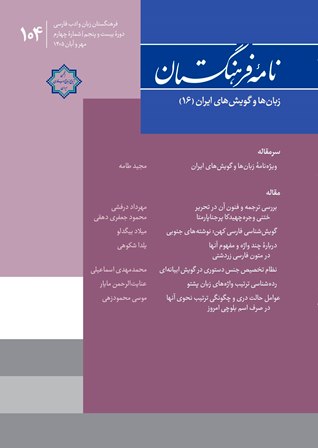
نامه فرهنگستان

نامه فرهنگستان

رده شناسی ترتیب واژه های زبان پشتو

نوع مقاله : مقاله پژوهشی

نویسندگان
1 گروه زبان و ادبیات پشتو، دانشکده زبان و ادبیات، دانشگاه وردک، وردک- افغانستان
2 زبان شناسی، دانشکده ادبیات فارسی و زبانهای خارجی، دانشگاه علامه طباطبایی، تهران، ایران
10.22034/nf.2026.539779.1435
چکیده
در این پژوهش ترتیب سازه های زبان پشتو از منظر رده شناسی زبان بررسی شده است. هدف از این پژوهش مطالعۀ ترتیب سازه ها در زبان پشتو و مقایسۀ آن با زبان های اروپا-آسیا و همچنین زبان های جهان می باشد. این پژوهش بر مبنای مقالۀ 1992 درایر و رده شناسی زبان های ایرانی (دبیرمقدم، 1393) انجام شده است. داده های این تحقیق با توجه به رویکرد میدانی از طریق مشاهده آشکار و مصاحبه ها به صورت تصادفی از گویشوران مرکزی زبان پشتو جمع‌آوری شده است. درایر زبان های جهان را به شش منطقۀ جغرافیایی تقسیم نموده و مؤلفه های معرفی شده را در زبان های هر شش منطقۀ جغرافیایی بررسی نموده است، بناً در رابطه به هر یک از مؤلفه ها (به جز مؤلفه 23) نتایج مشاهدات خود را در جدول های جداگانه ارائه نموده است، که وضعیت مؤلفه مذکور را در ʼگروه زبان هایʻ هر شش منطقه جهان نشان می دهند، چون زبان پشتو وابسته به جغرافیای اروپا-آسیا است، پس مؤلفه های زبان پشتو اولاً با زبان های اروپا-آسیا و ثانیاً با زبان های جهان مقایسه شده است، نتایج این پژوهش نشان داد که زبان پشتو در مقایسه با زبان‌های اروپا- آسیا با داشتن 16 مؤلفه فعل پایانی قوی و 15 مؤلفه فعل میانی قوی، در جمع زبان های فعل پایانی قوی
کلیدواژه‌ها
موضوعات

عنوان مقاله English

Word Order Typology in Pashto Language

نویسندگان English

Enayat Rahman Mayar 1
Mohammad Dabirmoghadam 2
1 Pashto Department, language and literature faculty, Wardak University, Wardak- Afghanistan
2 Linguistics, Faculty of Persian Literature and Foreign Languages, Allameh Tabataba’i University, Tehran, Iran.
چکیده English

In this study, the structure of Pashto language is examined from the perspective of language typology. The purpose of this research is to study the structure of Pashto language and compare it with the languages of Europe-Asia as well as world languages. This research is based on the 1992 article by Dryer and the book "Typology of Iranian Languages" (Dabir-Moghaddam, 1393) which examined Iranian languages based on 24 word order components. The data for this research was collected through fieldwork, observation, and interviews with speakers of Central (relatively standard) Pashto dialects. Dryer divided world languages into six geographical regions and examined the introduced components in the languages of each of these six geographical regions. In relation to each of the parameters (except parameter 23), he presented his observations in separate tables, which indicate the status of that component in the language group of each of the six world regions. Since Pashto language is associated with the Europe-Asia geography, the components of Pashto language were compared firstly with the languages of Europe-Asia and secondly with world languages. The results of this research show that compared to Europe-Asia languages, Pashto language with 16 strong final verb components and 15 strong medial verb components, falls into the category of languages with strong final verb component. Additionally, compared to world languages, Pashto language with 15 strong final verb components and 15 strong medial verb component shows a similar tendency between the categories of strong final verb and strong medial verb components.

کلیدواژه‌ها English

Language
typology
word order
Pashto language
global language
type

مقالات آماده انتشار، پذیرفته شده
انتشار آنلاین از 03 مرداد 1405

  • تاریخ دریافت 24 شهریور 1404
  • تاریخ بازنگری 21 آذر 1404
  • تاریخ پذیرش 03 مرداد 1405